
• Featured Articles
  • Blog
  • Essays/Reviews
  • Interviews
  • Reseñas y artículos selectos en castellano
  • Other Things
  • Contact
Menu

echorrhea

Street Address
los angeles
Phone Number

Your Custom Text Here

echorrhea

  • Featured Articles
  • Blog
  • Essays/Reviews
  • Interviews
  • Reseñas y artículos selectos en castellano
  • Other Things
  • Contact

Weinberg: Post-National Patriot

February 26, 2026 Néstor Castiglione

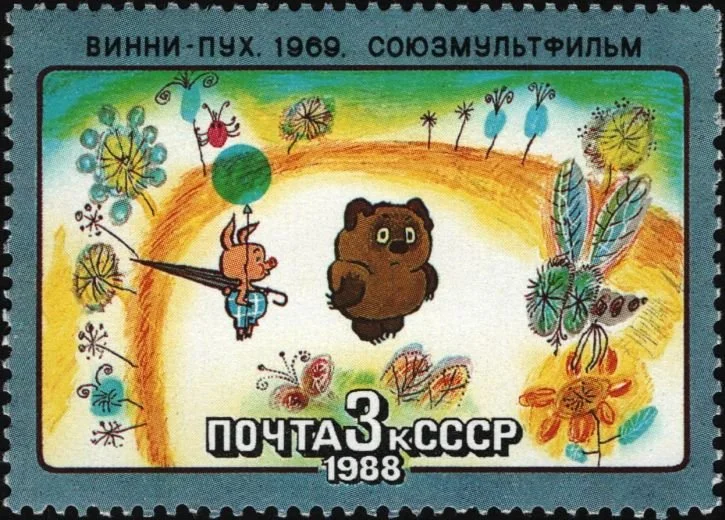
1988 Soviet stamp commemorating the Russian adaptation of Winnie-the-Pooh. Weinberg’s score for the cartoon was one of his biggest and most enduring professional successes. [Image:Wikimedia Commons/User:Matsievsky]

Prompted by my recent readings of Mieczysław Weinberg: Between East and West, I returned earlier this evening to his opera, The Passenger. Amidst the digital piles in one of my hard drives, there was a recording of the opera conducted by Mirga Gražintė-Tyla, issued last year by Deutsche Grammophon, that suddenly came to my recollection. (I had downloaded it, but somehow never got around to hearing it.)

As with all great operas, there are multiple layers of expression and meaning in Weinberg’s The Passenger, some intended, some not. Aside from its central theme, the traumas of the Holocaust, Weinberg’s opera also seemed to grapple with some of the frictive consequences of globalization. Not for nothing did the 20th century spawn two world wars (and a third if we count the First Cold War). Technology in the last century brought us closer together, occasionally uncomfortably so: distance sometimes really does make the heart grow fonder. Various languages overlap and sometimes interrupt each other throughout The Passenger; they reinforce not only the cultural, ideological, and national conflicts that produced the atrocities around which the opera is based, but imply still unknown, future horrors to come. It’s not so much that “we’re all in this together”, to borrow a pandemic-era mass media slogan, as it is every man for himself.

So what a surprise to be reminded that the interlingual discord in The Passenger was neither the making of Weinberg nor his librettist, Alexander Medvedev — this opera was meant to be sung in Russian. This wasn’t clear in Deutsche Grammophon’s recording; a digital-only release, it confoundingly does not include a libretto, liner notes, or even a track list. (My memory is fuzzy, but I don’t remember whether or not this subject is addressed in the booklet for Roland Kluttig’s recording.) A few key strokes on my computer eventually led me to learn that the multilingual version of the libretto was an adaptation for the 2010 performance in Bregenz.

Earlier this week, my copy of the latest issue of the DSCH Journal arrived in the mail. One of its recurring topics was the collateral damage the ongoing Russo-Ukrainian War has inflicted on international research into Shostakovich and 20th-century Soviet Russian music in general. Weinberg, who inhabits an even more delicate nodal point in this yawning civilizational fault line, is also one of its casualties, which is intimated in some recent trends I’ve noticed.

One of them is a noticeable attempt from some quarters to de-Russify Weinberg and his music, or to at least put some air between him and his now problematic adopted country.

David Fanning and Michelle Assay, in their foreword to the aforementioned Weinberg book, point out that the 2010 adaptation the libretto for The Passenger cut most mentions of Russian prisoners at Auschwitz “on the tenuous grounds that they reflect the pressures of Soviet cultural mores on the composer and his librettist”. (Restoration of these passages is unlikely post-2022.)

A few years before the war, Alex Ross, in The New Yorker, described Weinberg as “Polish-Jewish”, only mentioning the Soviet Union in passing as an impediment to the “full expression of his identity”, and bypassing any mention of Russia altogether. Another essay, on the Atlanta Symphony’s website, the third hit in a search for the composer, comes to an interesting conclusion:

By all accounts Weinberg was a modest and generous man, somewhat removed from the Soviet mainstream – he never joined the Communist Party — and with his heavily accented Russian destined to remain, at least in part, an émigré. Shortly before his death in 1996, dispirited by Russia's disregard for him and weakened by a long battle with Crohn's disease, Weinberg converted to the Russian Orthodox Church.

I’m not sure about his party affiliation. Rostropovich insinuated otherwise in Elizabeth Wilson’s Shostakovich: A Life Remembered, labeling Weinberg a party “insider”. (I’ll mention as an aside that his friend and colleague, Georgy Sviridov, who in Western academic discourse is often dismissed as a party hack or a third-rate oddity, was in actuality never a member of the CPSU and was, at least in private, skeptical of its ideals.) 

So if Weinberg was dispirited by how Russia treated him, then why would he convert to its church? And if the Soviet Union inhibited Weinberg personally and professionally, why did it promote his music, at least domestically? Why did he, in turn, compose quite a few works in praise of his adopted homeland, even as late as the glasnost period, not all of which appear to have been in response to official requests?

Alexander Tchaikovsky has noted that Weinberg was a lifelong “patriot” and believer in the Soviet way of life; this is confirmed in his mid-1990s interview with Manashir Yakubov. Weinberg, as it turns out, was not only a genuine Soviet artist — his second homeland was officially multi-ethnic — but also to an extent a post-national one. Polish by birth, Jewish by heritage, Russian by choice, his personal convictions and fluid trans-national identity discomfit those who prefer art that knows its place as easily commodified fodder for propaganda. “Poland is my homeland”, Weinberg once said, “but my second homeland remains Russia”. Caught between fences and international grudge matches in which he had no say, he is a man as much of our time as he was of his.
Tags mieczysław weinberg, david fanning, michelle assay, the passenger, opera, soviet music
Comment

A Complete Unknown

December 29, 2025 Néstor Castiglione

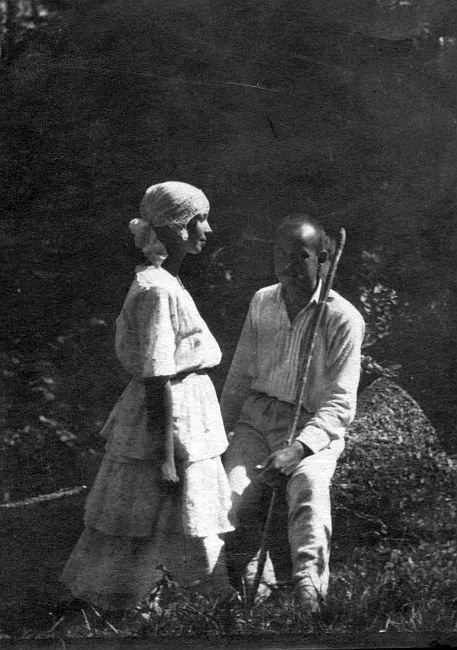
Mikhail Starokadomsky with his sister, circa early 1930s [Image: Russian Wikipedia/User:Ibyuthtq]

For an artist eager to succeed, a well placed apologist can be the difference between speeding ahead of the line and oblivion. They can also do wonders for talking around or deflecting attention to deficiencies in native talent. Remember the “nepo baby” furor from a couple of years ago?

Although a child of relative privilege (at least in comparison to the likes of Georgy Sviridov or German Galynin), Dmitri Shostakovich had no need for the crutch of familial nepotism. Nevertheless, his material achievements would’ve been a lot more difficult to come by had he also not cultivated an extensive support network in Russia and abroad from a young age. It’s enough to remember Gavriil Popov, his Moscow-born contemporary, who once was spoken in the same breath as Shostakovich during the pioneering years of Soviet music. He died forgotten in 1973, a fate his widow rightfully decried as an injustice.

Or Mikhail Starokadomsky.

I didn’t know his name either until a few weeks ago, when Pristine Classics issued the latest in their series of Artur Rodziński’s broadcasts with the NBC Symphony, which included a performance of Starokadomsky’s 1933 Concerto for Orchestra.

Who was this composer? He was born in Brest-Litovsk in 1901, the youngest of two children fathered by the military doctor and polar explorer Leonid Starokadomsky. The younger Starokadomsky grew up in St. Petersburg and began to compose from an early age.

In 1921, he enrolled at the Moscow Conservatory, where he studied composition with Nikolai Myaskovsky and Sergei Vasilenko, as well as organ with Alexander Goedicke. Soon after, Starokadomsky was among the founding members of an informal new music circle known as the “Moscow Six”, which included fellow pupils Mikhail Kvadri, Lev Oborin, and Vissarion Shebalin. Around this time he also joined the Association for Contemporary Music.

Starokadomsky joined the faculty of the Moscow Conservatory in 1930, where he taught and later authored a number of important textbooks. His transition from post-Schoenbergian to neo-classicist was well under way by this point. Aside from being a composer, organist, and pedagogue, he also worked in programming for All-Union Radio and wrote musical criticism. His most enduring achievement was in the genre of children’s songs, for which he was awarded a Stalin Prize (third class) in 1952. He died in 1954, predeceasing his father by about a decade and his wife by several more. A Russian blog post implies that Starokadomsky’s death was the result of a chronic illness, but it didn’t specify which. He and his wife are buried at the family plot in Vvedenskoye Cemetery in Moscow.

It is tempting to hear Starokadomsky’s Concerto for Orchestra as a derivative of Hindemith’s from 1925, but their stylistic convergences are probably as much the result of coincidence as deliberate study. More telling, perhaps, are parallels between the Starokadomsky and Shostakovich’s 1940 Piano Quintet. In May 1941, Starokadomsky’s Concerto for Orchestra was hailed by Valerian Bogdanov-Berezovsky as a testament not only to the variety of expression that Soviet culture fostered, but also as an exemplary fusion of neo-classicism and socialist realist ideals. One wonders whether Shostakovich, who had been personally acquainted with Starokadomsky since December 1924, had the concerto in the back of his mind while he composed the Piano Quintet. Even more tantalizing is a potential earlier overlap between the composition of the magisterial passacaglia at the center of Starokadomsky’s concerto and the one in Act II of Shostakovich’s Lady Macbeth of Mtsensk District. Was it a coincidence that both these composers wrote passacaglias around the same time?

Starokadomsky’s Concerto for Orchestra was perhaps his widest performed orchestral work. It was first played outside of Russia at the 1937 ISCM festival in Paris. Serge Koussevitzky, who was in attendance, later bemoaned to reporters that most of the music he had heard there was “wretched, positively wretched”. (Not an entirely fair appraisal, given that excerpts from Hanns Eisler’s superb Deutsche Sinfonie were also among the works performed.) Starokadomsky’s Concerto for Orchestra was one of only two scores Koussevitzky brought back to conduct for the Boston Symphony’s 1937–1938 season. (The other was Gian Francesco Malipiero’s Second Symphony.) After its US premiere on December 17, 1937, Cyrus Durgin, the music critic for the Boston Globe, praised the Starokadomsky concerto as “honest, unforced and buoyant, reasonably melodic, free from the extravagance of dissonance for its own sake”. His review of a subsequent performance a few weeks later solidified that impression. “Where more than one modern piece is merely noisy”, Durgan said, “Starokadomsky’s Concerto seems powerful”. Koussevitzky’s performances were followed by others in North America, Europe, and Australia conducted by a number of conductors, including Malcolm Sargent, Werner Janssen, and of course Rodziński. American reviews of the work ranged from Miles Kastendieck’s damnation by way of faint praise in the Brooklyn Eagle (“Its strongest claim for attention is effectiveness for whatever that is worth”), to Bruno David Ussher’s puzzlement in the Los Angeles Daily News (“I am offering a prize to anyone who will convincingly tell me why the Starokadomsky Concerto for Orchestra should have been broadcast on Saturday’s NBC symphony program”), to Herbert Elwell’s red-baiting in The Plain Dealer (“If this is the music of Communism, give me the bourgeois platitudes of Strauss”). Postwar critics, possibly influenced by the incipient Cold War, were even more hostile. London’s Daily Herald dismissed Starokadomsky’s concerto as so much busyness that could not “conceal the absence of anything worth calling a musical idea”. Then there was the bitchy takedown of the “so-called concerto” in Sydney’s Truth: “The music is bustling, perky, and brilliant — and says nothing”.

Virtually alone in his praise was Arthur Loesser in the Cleveland Press, who wrote that the Concerto for Orchestra was among the finest new works he had heard. Unfortunately for Starokadomsky, the Loesser man did not prevail.

Long forgotten composers tend to stay that way because of entrenched skepticism of the unfamiliar, as well as belief in an objective meritocracy of the arts. After all, if a composer was forgotten or ignored, they probably deserved it, or so people seem to think. It often happens, however, that the only things obstructing a fair hearing of a composer’s work are entrenched prejudices. Shostakovich had to contend with those too, but at least in his case — and unlike Starokadomsky — he had a little help from his friends.

Tags mikhail starokadomsky, dmitri shostakovich, artur rodzinski, nbc symphony, serge koussevitzky, arthur loesser, soviet music, 20th-century music
Comment