
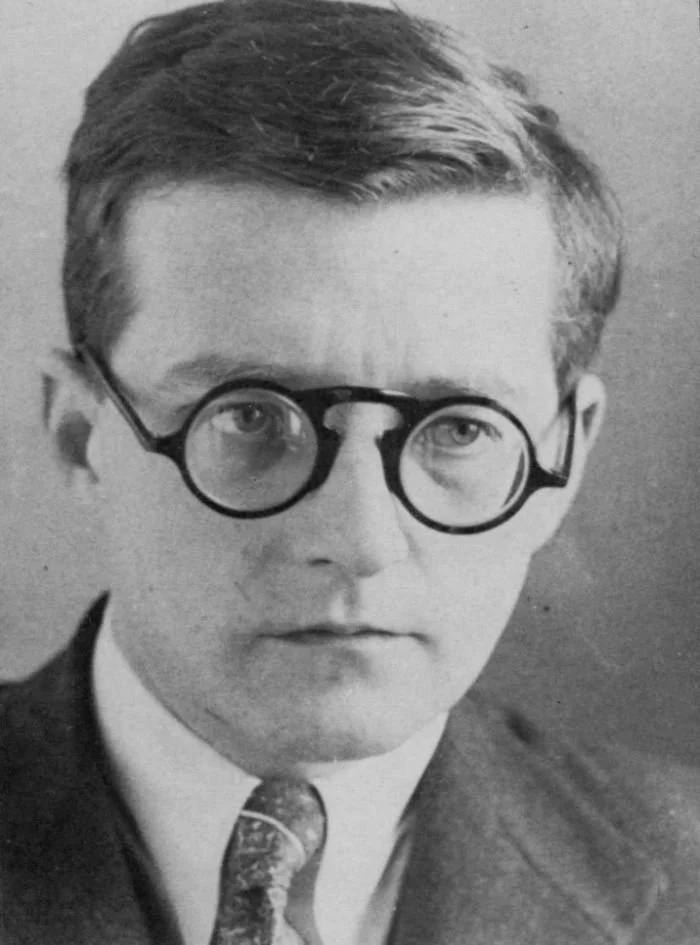
My recent dive into Roy Harris almost led me to overlook that today is the 90th anniversary of the “Muddle Instead of Music” article that effectively ended the first stage of Shostakovich’s career. As with everything else relating to the composer, the notorious op-ed has acquired a certain mythos, including that it forced Shostakovich to turn away from modernism (he had already moderated his style significantly since the Second Symphony) and that the essay was penned by Stalin himself (not true; in fact, Marina Frolova-Walker has shown that, compared to his deadlier interest in film and literature, he kept comparatively aloof from musical affairs).
I thought it’d be interesting to share some excerpts of contemporary coverage of the event. Some things never change: political biases warped Western Shostakovich scholarship and reportage in the 1930s just as much as they often do now.
One of the earliest reports was a brief from the Associated Press published on February 16, wherein it stated that the attack on his music had been extended against other composers, including Gavriil Popov and Alexander Mosolov.
A fuller report followed on April 6 from Sergei Radamsky in the New York Times, which provided an outline of the now familiar saga.
A week later in the same paper, Olin Downes, who had been one of the fiercest critics of Lady Macbeth of Mtsensk District, began his analysis with cautious approval:
Now we learn that Stalin, a man of some musical experience, and, one would say, common sense, saw Lady Macbeth and instigated, in a direct or indirect manner, newspaper disparagement of it.
Downes’ mood turned to outright glee as the article continued, taking swipes at “our brethren on the left” and at Shostakovich himself, who, the critic said, now had shun the modernists and, instead, reconcile himself to the classics. Perversely, Downes viewed the persecution of Shostakovich as being indicative of diminished official interference in Soviet cultural life.
The columnist Bruce Catton echoed those sentiments in an op-ed that barely concealed its glee over the humiliation visited against a presumed ideological adversary:
Until a few days ago, Shostakovich was the darling of the radicals. His music embodied the purest spirit of Communism, and when capitalist outfits like the Philadelphia Orchestra played some of it, the world revolution drew perceptibly nearer.
But Shostakovich has gone off the front page and is back among the want ads, and no good Communist will listen to him.
A few months over we swing from one deep end over to another.
On November 8, the Daily Worker printed an essay by the artist Jacob Burck of his recent visit to the Soviet Union. He began by relating the festive atmosphere, the material plenty, and beautiful women he encountered in Moscow, which he said was “quite a change from the depression atmosphere” in the United States. A few paragraphs later, he touched upon the “Shostakovich case”:
[It] was merely an incident in a campaign by the Soviet press to jolt the Russian art world into an appreciation of sensible art values. Shostakovich was evidently a good example to begin with. This campaign didn’t stop with Shostakovich. Famous writers, artists, and architects who were going arty à la Paris and other centers also got it in the neck. Contrary to predictions in the capitalist press none of these are living in garrets and Shostakovich is at the present time busy on a new opera.
Pauline Fairclough, in her recent monograph on Lady Macbeth of Mtsensk District, noted that the commotion over the opera quickly dissipated. The campaign against the work served as a useful template for Soviet officialdom, which then repeated and modified it against figures in other sectors of the fine arts. Unlike Burck’s cheerful report, however, Fairclough sketches the real-life consequences this had for Shostakovich and those in his immediate circle. “He was permanently scarred by the trauma of what happened to him”, she said, “and his youthful confidence would never fully return”.