
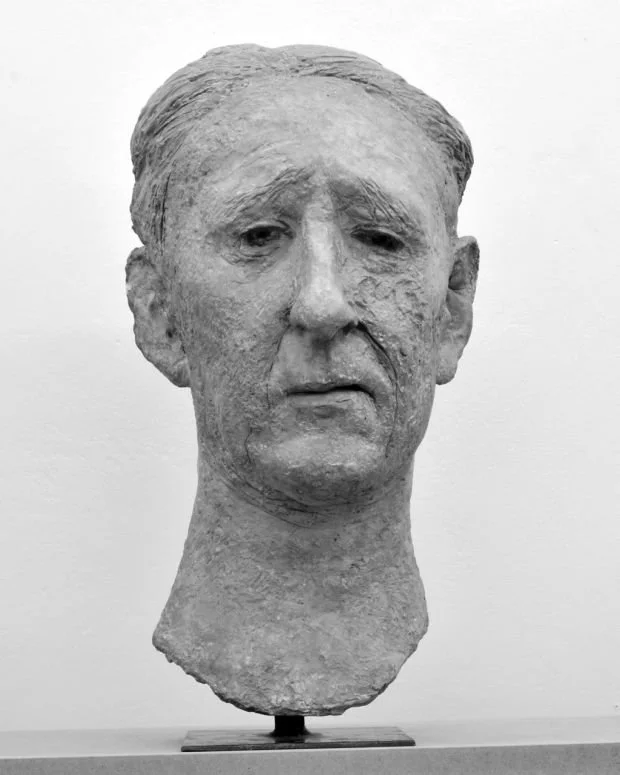
Yesterday afternoon I heard a rustling at my doorstep: The characteristic sound of the Amazon delivery person making a drop. A few months ago I’d pre-ordered Jakub Hrůša’s latest recording, a cycle for Deutsche Grammophon of Martinů's symphonies. Less out of enthusiasm for the conductor — I think he’s generally satisfactory; his talents conform comfortably to 21st-century expectations — than for the composer.
An American Record Guide critic, whose name I can’t recall, long ago memorably described Martinů’s work as “filament music.” That summed up my own appraisal, more or less, until I discovered his Fourth Symphony about 20 years ago, thereby beginning a slow personal reevaluation. My initially negative reactions to the composer’s music probably aren’t dissimilar to those of other listeners. The Czech composer was a quirky artist; his music, despite its outward appeal, continues to strike audiences as being as odd as the man himself apparently was.
For all Martinů’s fecundity and originality, his music has never attained the esteem that, say, Prokofiev or Shostakovich, two composers of comparable contemporaneity and scope, enjoy. The trajectory of the Czech’s fame is closer to those of Honegger and Hindemith, both of whom enjoyed international renown before lapsing into relative posthumous obscurity, at least to the general public. As Thomas D. Svatos notes in his Martinů’s Subliminal States: A Study of the Composer’s Writings and Reception, with a Translation of his American Diaries, this decline in interest began in the very last years of the composer’s life, widespread press interest in his final symphony notwithstanding. Academia has been no more kind, largely marginalizing him from retrospectives of 20th-century music.
Svatos argues that one of the key reasons for Martinů’s continued exclusion is that he is not perceived as a serious musical thinker in the manner of Schoenberg. This was likely a major contributing factor to the Czech’s posthumous decline in the decades immediately after his death, but doesn’t quite explain his awkward position on the periphery of 21st-century listening. Whereas the 20th century prized intellectual rigor, audiences and academics of the present century have increasingly embraced a return to the emotionality of the 19th century. Thus the continuing posthumous ascent of Shostakovich, the turn to Romanticism in the later music of Glass and John Adams.
Although Martinů was a composer of profoundly expressive music, he was uninterested in relying on what he believed were merely stock gestures that betoken “emotion,” like cue sheets for silent film music, rather than resound as expression itself. “Life is strict, inconsiderate, and fast; it does not leave time for fumbling around in the extremities of feeling,” he wrote in an essay praising Stravinsky. “It demands intensity — a forceful, compact form, and concentrated contents.” In the same essay Martinů praises Schoenberg for being “the first to see the mistaken path along which music had been led astray,” but then tellingly criticizes him for being unable to “overcome his deep, inborn German Romanticism.” In a later program note for the Czech Philharmonic, Martinů approvingly points out how “Stravinsky does not like German music, reproaching it for its contrived pathos and ‘manufacturing’ of emotions that persevere through the help of characteristic motives that are purely German.” Martinů could’ve just as well been writing about his own aversion to Teutonicism.
Which is why I was mildly tickled upon looking at the cover of Hrůša’s cycle earlier today. Deutsche Grammophon’s marketing blurb printed along the top of the set’s back manages to not only imply a connection or at least kinship between the composer and German musical culture, but also somewhat clumsily elides the Bamberg Symphony’s origins, which did have consequences for the composer of Memorial to Lidice. The blurb is worth quoting:
The Bamberg Symphony traces its artistic lineage to Prague, with roots reaching back to the Estates Theatre and the city’s rich musical culture. Based in Bamberg since 1946, the orchestra has brought its rich and warm sound to music lovers worldwide. In a close artistic partnership, Hrůša and the orchestra bring this shared heritage to life with clarity, depth, and expressive power.
That’s one way of putting it.
For those unaware, the Bamberg Symphony is the direct successor of the orchestra of the German Theatre in Prague, which had once counted Weber and Mahler among its conductors. Its musicians were expelled during the mass ethnic cleansing of Germans from postwar Czechoslovakia that followed the defeat of Germany in World War II. They regrouped in the Bavarian town of Bamberg, where they founded their orchestra in 1946.
What would Martinů have thought about this inferred connection? A personal jotting he made in his notebook may give an answer:
Just recall the concentration camps, the mass and planned destruction; responsible for this was a people who were considered the most heavily influenced by music and loved it the most — i.e., the Germans. Hence, we ask, where are all those Beethovenian influences? Where are all those musically religious and mystical influences that are supposed to transform people for the better? This is not the failure of music, but the failure of religion [...] In Germany today, where are the ones who — with their entire arsenal of “deep” theories — were overcome by Beethoven’s compositions but arrived at a complete degradation of man on a scale you find few examples in history?
Not good marketing copy, though it certainly gets the point across forcefully enough.
Given Martinů’s aversion to German music and its topoi, his engagement with the genre of the symphony seems curious. It began during wartime, while he was exiled in the United States. For many serious European composers escaping the war, emigrating across the Atlantic was a mixed blessing. Physical security was certain; economic security, exacerbated by the American musical establishment’s deeply-ingrained conservatism, less so. Martinů’s late embrace of symphonic form, therefore, was as much creatively expedient as it was essential for his professional survival.
Born from conflict, reacting against one bellicose hegemon, flattering another, Martinů’s symphonies make for thought-provoking listening, especially in an age where his former adopted nation is currently embroiled in one ill-advised proxy war, and in another more ill-advised direct war with grave implications. An avowed skeptic of the redemptive force of art, particularly music, it is ironic that Martinů’s symphonies today contain more potential for comfort and even transcendence than its composer may have realized. He doesn’t make it easy. Listeners expecting the Czech composer to be within the ambit of post-Mahlerian symphonic tradition may be disappointed. Emotive power is achieved without ever surrendering the integrity of his craft and, more importantly, self. (Would he have been surprised to find himself agreeing with Brahms, who once wrote that “beautiful [music] should be, but perfect it must be”?)
Not the art of a great or consistent theorist, perhaps, but more importantly Martinů’s six symphonies encode the living truth of a great human being.